Monday, October 10, 2011

CISS brings water to Yunnan


This past month, CWEF partnered with Concordia International School Shanghai (CISS) to install a clean drinking water project in a small village outside of Lincang, Yunnan.  22 students and 2 teachers helped dig trenches, lay pipe and build a cistern to help over 100 villagers get clean water.  Everyone put in a lot of effort and all together, with the villagers and students working side by side, the water project was almost completed in only one week.  Many of the students interacted with the villagers laughing and learning about each others lives.  A few boys helped build a basketball hoop out of bamboo and an old basket while some girls helped in the kitchen preparing our meals.  Many villagers have never seen a foreigner before and were very perplexed at our actions and speech. 


Each night the students reflected on their experience in the village that day and many were touched by how hard the villagers worked and what lengths they had to go to to get water.  Our partnership with CISS not only provides poor, rural farmers with clean water but it also opens the eyes of high school students to a different lifestyle.  In addition to this water project, CISS participated in an eyeglass clinic, two English teaching projects and another water project with CWEF this past month. 

The progression of a water project:
Identify clean water source and build cistern with filtration
Dig trenches and pipe water to village
Build cistern at village
Pipe water to each household
Clean water!
Carrying bricks up the mountain to build the cistern
Digging trenches
Building of the cistern
Some villagers laughing at the students
A few students made a basketball hoop made out of bamboo and a basket
Outside the home of a family where we did an interview
Helping remove corn kernels from the cob
Nice view!
Cistern at the fresh water source, the fire is to help attach two pipes
Workin hard
I made a friend

Monday, September 19, 2011

National Day of Humiliation Remembered


This past Sunday morning, I awoke to sirens wailing outside my window.  I looked outside to see if there was a storm, but it was a clear sunny day.  On my way to fellowship, I could tell the sirens were coming from all the police stations located around the city.  And it wasn't until the speaker at fellowship informed all of us that the sirens were marking a historical day in China that I understood.

80 years ago on September 18th, Japan attacked Chinese troops in Shenyang, in the northeast of China.  The actual event is still a controversy as to who started it, but the Chinese say (as well as Wikipedia :) Japan blew up a section of the railway under its control near Shenyang.  Japan then accused Chinese troops of sabotage and bombarded the barracks of the Chinese troops that same evening.  Over the next few months, Japanese troops invaded much of northeast China starting a full-scale invasion of China and triggering a 14-year war of resistance against Japanese aggression.

Chinese troops had been under instructions to adhere to a nonresistance policy and were urged to not put up a fight, thus making it easier for Japanese troops to occupy many major cities and their surrounding areas with minimal difficulty.  The Chinese troops were made up of mostly irregulars or new recruits and were no match for the experienced Japanese troops. At this time, the Chinese government was preoccupied with numerous internal problems; a newly independent Guangzhou government, a Communist Party uprising and terrible flooding of the Yangtze River.  So China turned to the international community and appealed to the League of Nations calling for the immediate stop to Japanese military operations in Manchuria.  Japan rejected to the League of Nations attempt at negotiations and ended up resigning from the League of Nations in March of 1933.

Many Chinese view this day as a National Day of Humiliation and are urged to never forget the event.  "The past humiliation should be remembered, and it should also be taken as a driving force for the Chinese people to strive for the country's rejuvenation."

To read more about this event and China's reaction visit:
Mukden Incident - Wikipedia
Commentary: China Should Never Forget History of Humiliation


Monday, September 12, 2011

What A Small World It Can Be


I recently received an email from two Chinese exchange students who are studying at my alma mater, the University of Illinois, Champaign-Urbana.  I was shocked to hear that they had received my email address and information from my parents at the recent football game.  They happened to be sitting next to them and my parents, being the friendly people they are, started up a conversation.  They learned that these two students came from a university in Beijing and are studying at U of I for one semester.  My parents taught them the rules of the game and shared many stories with them of their dedication to U of I.

I emailed these two students back asking what they are enjoying about studying in America and what they miss about their home country, China.  After living in China for over a year, I recognize the many differences between the two cultures and how difficult and exciting it can be for an exchange student.  I have had to deal with many hardships adjusting to Chinese culture and I am sure that for many exchange students, living in America is a shock to what they are used to.

I stumbled upon an article on NPR explaining the struggles that these cross-cultural students can have.  It gives many examples of how awkward and un-relatable living in another culture can be.
Take a look: From China to the U.S.: Student Juggles Two Worlds

Some of you may know that I studied abroad twice while in college.  I went on a short-term winter trip to Benin, Africa in 2007 and a semester long study in Tuscany, Italy in 2008.  It was because of these opportunities that I am living and working in China today.  I recognized my passion for international work and the desire to learn more about other cultures. I encourage everybody to either study abroad while in school or go on short term trips.  They are invaluable experiences and often life changing.

My parents at the U of I football game...Go Illini!!

Sunday, September 4, 2011

Beautiful Yunnan Photos


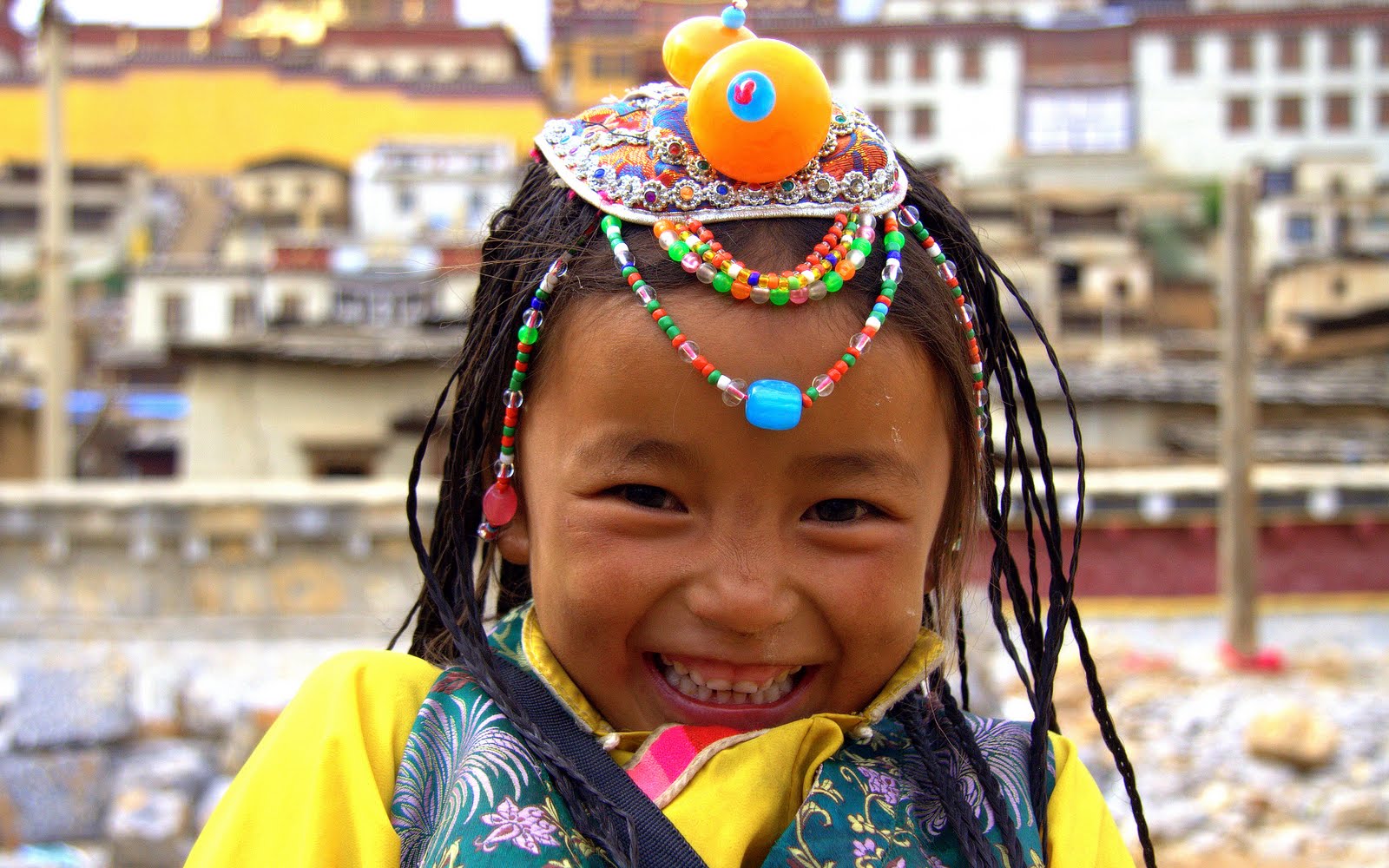
Here are a few gorgeous photographs taken by a professional photographer around Yunnan, not me.  They highlight the different minority groups and their traditional dress.  Enjoy!  More to come later.


Friday, August 26, 2011

Calling all pregnant women

This goes out to all the pregnant women out there. How would you like to spend an entire month after you give birth in your pajamas? This is a traditional Chinese custom for pregnant mothers. For 30 days after the birth, the mother and baby are not allowed to leave the house, not even go outside. Still interested? This custom is literally called "sitting the month" (zuo yuezi) in Chinese. Along with not leaving the house, a new mother cannot eat raw fruit or vegetables, drink coffee, have cold drinks or even cold water. These rules are supposed to help restore the balance to the new mother's body after childbirth.

Along with eating bland food and tepid liquids, the new mother cannot take a shower or brush her teeth for the entire month. They bundle up in wool socks and warm clothing, even in the summer, to prevent a chill. Chinese doctors warn that getting a chill could lead to joint problems or illness later. Another Chinese belief about newborns is the lack of physical touch. A common thought is that too much cuddling is not good for the development of the newborn's bones. They don't want the baby to become dependent so they don't hold him much in the first month, only for breast feeding.

Restoring the balance refers to the Yin and the Yang. The Chinese believe that everything in life requires balance between the Yin and the Yang for harmony to exist. If imbalance occurs than a person will become ill. Pregnancy is believed to create an imbalance within the body that must be restored postnatally or the mother will suffer the consequences later in life.

As the modern world is butting heads with the ancient one, Chinese traditions have started to bend just a touch. New, modern postpartum centers are popping up all over China. New mothers are transferred to these confinement centers right after they give birth and are then waited on hand and foot for the next 30 days. At $500 a day, many mothers say it is worth it to have nutritionists, trained nurses and doctors on hand 24-hours a day to monitor their baby. Inside these centers, new mothers are given a sponge bath by nurses who wipe them down with washcloths steeped in Chinese medicine about once a week. According to the traditional rules, a mother is not supposed to bathe for 30 days, but rules are being bent for the needs of the modern woman. This new generation of new mothers is experiencing the consequences of the one-child policy. Because they have not grown up with younger brothers or sisters, they need more help now than ever before. They don't know how to look after kids and are just happy that there are people at these centers that can teach them.

A few other rules and reasons behind them:
-Drinking tea is not allowed as it might harm the baby.
-If a woman doesn't stay in bed the whole month or does any sort of exercise this could result in a prolapse of the uterus.
-They wrap their bellies with a special cloth to get it flat again as soon as possible.
-Air conditioning, fans and opening of windows is not allowed. Break this rule and it is believed that you will have arthritis and migraines in old age.
-Women must breastfeed lying down on her side.
-Reading and watching TV are limited for the prospect of eye disease.


As much as I would enjoy a month in my pajamas with my baby, I think I'll stick to the American way of getting my body back to normal through exercise and careful, but not superstitious, diet.

Saturday, August 20, 2011

Home Service


I can't believe it is the end of August and September is just around the corner. It was just June and I was sitting on the edge of my seat in anticipation for my trip home to America. Well, I am back in China after a wonderful three and a half weeks seeing family and friends in my home country, America. I cannot believe I have lived in China for over a year now and only have a few months left of my service before I head back home for good.
My time at home was fulfilling and enlightening. A few highlights: Going to Wrigley Field with my Dad to watch the Cubs face the Nationals. Spending time with my brother in the great city of Chicago. Seeing my sister and spending a family weekend at our cabin in Wisconsin. Laughing with my old Camp Arcadia friends and reminiscing about out summers on staff. Seeing my old college roommate and discussing the upcoming wedding we will both be in. Spending time in the mitten of the north (Michigan) and seeing the calming shores of Camp Arcadia.
I also got the chance to visit two churches that are supporting my work. I spoke at Immanuel Lutheran in Adams, Wisconsin and my home church, Trinity Lutheran in Lisle, Illinois. It was great to be able to talk openly about my work and hear affirmations from loving and caring supporters. Sometimes, on the field, it is easy to forget that I have a support network back at home and I can feel rather lonely at times. Returning home in the middle of my service has reminded me of the support I do have, even if it is across the globe.
Coming up this fall are a few trips I am very excited for. My boss comes into Kunming this next week for an orientation and to welcome CWEF's two new English teachers. At the end of September, Concordia International School Shanghai (CISS) comes to Yunnan for several service projects where I will help lead one water project. Then in October, I head to Guangdong Province to help lead an English teaching project with Hong Kong International School. Please pr-y for the new English teachers traveling to Kunming for the first time these next few days and bless their time here with peace and comfort in a time of newness and discovery.


Friday, July 8, 2011

Cambodia and Vietnam


A week ago, I took a mini vacation and traveled down to Phnom Penh, Cambodia to visit an old friend, Aurora Sandell who is now the Service Coordinator for CWEF in our Cambodia office. It was a great chance to catch up, get out of China and see what our other offices are doing. She took me around the city, specifically stopping at the Killing Fields and S-21. This is where thousands of Cambodians were killed by the Khmer Rouge in the 1970's. A tragic ruling of the Communist Party at the time, shocking to have stood on the grounds of so many murders.


Then we picked up the mood and traveled to Siem Reap, Cambodia where the famous Angkor Wat is. We got up at 4:30 am and were touring the temples that make up the grounds of Angkor Wat by 5:15 am. It was so cool to see something so historic, so massive and wonder how they built such large temples without modern day construction equipment. We walked around Bayon, the temple with hundreds of faces carved into its rocks. Then Ta Prohm, the place where Tomb Raider was filmed with its gigantic trees and roots weaving in and out of the rock. Then the famous Angkor Wat, the largest of the temples and also shown on the Cambodian flag. It truly was an amazing experience to walk around one of the wonders of the world and take in how large and historic this piece of earth is.


After Siem Reap, we flew to Saigon or Ho Chi Min City, Vietnam. Here we toured the War Remnants Museum and were once again reminded of the horrors of war and how awful people can treat other human beings. Saigon was as crazy as you might have heard. Motorbikes zooming past in every direction, people selling fake accessories on the street and of course, delicious Vietnamese food at every corner. I thought I could handle crazy traffic coming from China, but Saigon's traffic even threw me for a loop.


After Saigon, we flew to Phu Quoc Island, off the coast of Vietnam. This is a small island not yet bombarded with tourism. The island is actually only 15 km away from Cambodia, but is currently owned by Vietnam. In a few years, this place will be filled with resorts and fine restaurants but for the time being, it was a nice and affordable getaway for Aurora and I.


We hopped on a ferry that took us back to Vietnam where we crossed the border back into Cambodia and traveled back to Phnom Penh where we started the whole adventure. It was a great trip, exhausting but adventurous nonetheless!